
Moving a step closer to completing its nuclear triad, India today successfully test fired a ballistic missile, with a strike range of around 1,500 km, from an underwater platform in Bay of Bengal. "The medium range K-5 ballistic missile was test fired successfully today from an underwater pontoon and all parameters of the test firing were met," said Defence Research and Development Organisation chief V K Saraswat from the undisclosed test area.
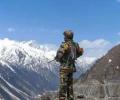
The Heron unmanned aerial vehicles are already in the Air Force, Navy, and the Army and are being used extensively at the moment by both Army surveillance and Target acquisition batteries and Air Force in the Ladakh sector.
The missile was aimed at a moving object, sources said.
If DRDO can appreciate that a technologically advanced and vibrant defence industry is equally critical for India's security and its global aspirations, we will not replicate this mistake. In other words, it should be made to realise that it solely exists to support the armed forces and not vice versa. Therefore, New Delhi should force ruthless accountability within DRDO and ensure fruitful collaboration with the private sector.
The indigenous Kaveri aircraft engine, soon to make its debut flight, lacks the muscle needed by India's Tejas light combat aircraft, which the engine was designed to power. In its present form, the Kaveri will never power a modern fighter. The Indian Navy is snapping up the Kaveri for powering its growing fleet of warships.

Although the BJP has never been ballistic about the BJD and Narendra Modi has avoided being critical of Naveen Patnaik, the BJP is optimistic that the party can improve its electoral fortunes in Odisha on its own, notes Rup Narayan Das.
Tactical systems such as main battle tank Arjun, light combat aircraft Tejas, a family of radars, electronic warfare systems, sonars, torpedoes, armaments and missiles have been successfully developed in the country and many of them are being delivered to the armed forces. The recent success of the DRDO (Defence Research and Development Organisation) in the launch of interceptor missile and Agni-III has taken our country into the elite club of a few developed nations.
After a detailed deliberations, it was decided a standard draft international agreement for establishing hotlines and a set of standard operating procedures will be prepared by DRDO and MTNL, which will be used for negotiations with foreign partners, the sources said.
Defence Minister A K Antony on Tuesday indicated a revamp of the Defence Research and Development Organisation, to give it capability to produce futuristic systems within the country."DRDO will have to play a crucial role in providing strategic defence with suitable delivery systems to the nation," Antony said. The DRDO and the end-users, the armed forces, would have to work with greater synergy to achieve the goal of self-reliance and minimise dependence on foreign nations.
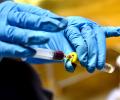
According to various global media reports, China is creating Covid-like pathogens in Pakistan that have the potential of causing virus contamination on a scale far higher than Covid.
Scientists at the Leh-based Regional Research Laboratory have cross-bred the region's famous yaks with high yielding Swiss cows to produce a new breed, which can withstand extremely high altitudes.

Describing the trial as "fully successful", the sources said, the sophisticated missile travelled for 19 minutes and covered 4,900 km.
As protests rage in Kudankulam and reach a crescendo, V Ponraj, scientific advisor to Dr A P J Abdul Kalam, speaks about the report he and the former Indian President prepared in this interview with rediff.com's Shobha Warrier.
This is the first of a four-part series on the DRDO, which has instituted fundamental changes in the way it will approach equipment development.
After failing to hit its target in the previous test, a new version of the 290 km-range supersonic BrahMos cruise missile was on Wednesday successfully test launched at a firing range in Pokhran in Rajasthan.

The missiles were randomly chosen from the production stock and the entire launch activities were carried out by the specially formed strategic force command and monitored by the scientists of Defence Research and Development Organisation as part of training exercise, a defence scientist said.
The indigenously built multi-target missile can carry a 50kg payload.
The grenade will help them to smoke out terrorists from their hiding without any bloodshed and save hostages. The 'chilli smoke grenade' will irritate eyes, skin and respiratory traits, inflicting an immediate breathing difficulty and swelling of eyes to force the persons to come out in the open.
The army confirmed that they will buy 12 Nishant Unmanned Aerial Vehicle for reconnaissance and surveillance operations, a top Defence Research and Development Organisation official said on Friday.

'The range of purchases throw a light on India's threat perception as also its perceived role of being a stabilising influence in the region,' says Brigadier S K Chatterji (retd).

With the Indian Navy's requirement of conventional submarines standing at 24, there is critical need to expedite the planned acquisition of six more conventional submarines.
The PM said that India stood for peace and for peaceful resolution of all problems between nations.
"The Prithvi missile was test-fired as part of a user's trial by the Indian Army and the test was successful," defence sources said. The 8.56 metre-long and one metre thick Prithvi missile can carry a pay load of 1000 kg explosives.
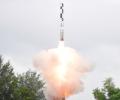
India has already deployed a sizeable number of the original BrahMos missiles and other key assets in several strategic locations along the de-facto border with China in Ladakh and Arunachal Pradesh.
After failing to hit the target in the previous test, the Defence Research and Development Organisation is planning to test-fire the Block II version of the BrahMos supersonic cruise missile on March 4."We are planning to conduct the second test of the BrahMos Block II version at the Army's test range in Pokharan on March 4 this week," Defence Ministry officials said.
Former President A P J Abdul Kalam said the Pokhran tests of 1998 were successful as desired yield was obtained. Kalam was reacting to former senior Defence Research and Development Organisation scientist K Santhanam's contention that Pokhran-II tests had not met the desired objective.
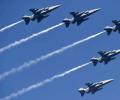
He reaffirmed the government's commitment to resolving any outstanding issue in the way of growth and development of indigenous defence industries.
This will be the second launch of the 3,000-km range missile after an unsuccessful test on July nine last year from the integrated test range at Wheeler Island near Balasore in Orissa, defence officials said.

The IPMV was developed by Tata Advanced Systems Limited.
The DRDO has clearly decided that developing technologies is at least as important as developing weapons systems. V K Aatre, DRDO chief from 2000-04, had said, "Weapons programmes and technologies have to maintain equal pace." Only now is the DRDO heeding his advice.
India is deploying cutting-edge technology to defeat a simple insurgent weapon that J&K militants and Naxals are using to lethal effect: the Improvised Explosive Device, or IED. Swedish company Saab has offered to partner India's Defence Research and Development Organisation in fitting Saab's CARABAS radar on India's Dhruv Advanced Light Helicopter (ALH), which would allow the scanning of wide swathes of territory to detect IEDs well before they can be exploded.
K Santhanam, former Defence Research and Development Organisation scientist, who has rubbished the nuclear test at Pokhran in 1998 told journalists that he believed India neede to conduct two more tests to perfect the thermo-nuclear technology required to make a Hydrogen bomb. Santhanam maintained that simulations or computer-based tests were not enough to perfect thermo-nuclear technology. His statements are an antithesis of the Indian governments' position on this issue.
After three successful ballistic missile tests during the last fortnight, the Defence Research and Development Organisation is finalising preparations for the big one.
Dismissing a top nuclear scientist's contention that Pokharan II was not a complete success, Atomic Energy Commission chief Anil Kakodkar on Friday said the tests in 1998 achieved '100 per cent desired results'.Speaking at a function organised by the Raja Ramanna Centre for Advanced Technology in Indore, Kakodkar said, "Pokhran II tests were a complete success and they achieved 100 per cent desired results."
Agni 5 is not China-specific, as some have claimed. It is essential to India's overall security and should be followed by a submarine-launched version, says Premvir Das
The Indian army will have to wait four to five years to acquire Inter-Continental Ballistic Missile Agni-5, which was successfully tested on 19 April by the Defence Research and Development Organisation. Sheela Bhatt reports

India on Monday successfully test-fired its nuclear-capable Agni-II missile intermediate range ballistic missile, with a range of 2000 kms, from the Wheelers Island off Orissa coast.
India will join the elite club of nations having ICBM with the Defence Research and Development Organisation planning to carry out the launch of over 5,000 km-range Agni-5 missile in April.

'We were sure our appeal would succeed. We knew we could break down the evidence and show it was hollow.'
